9 hr
Gobustan & Absheron Off-Road Adventure with Lunch
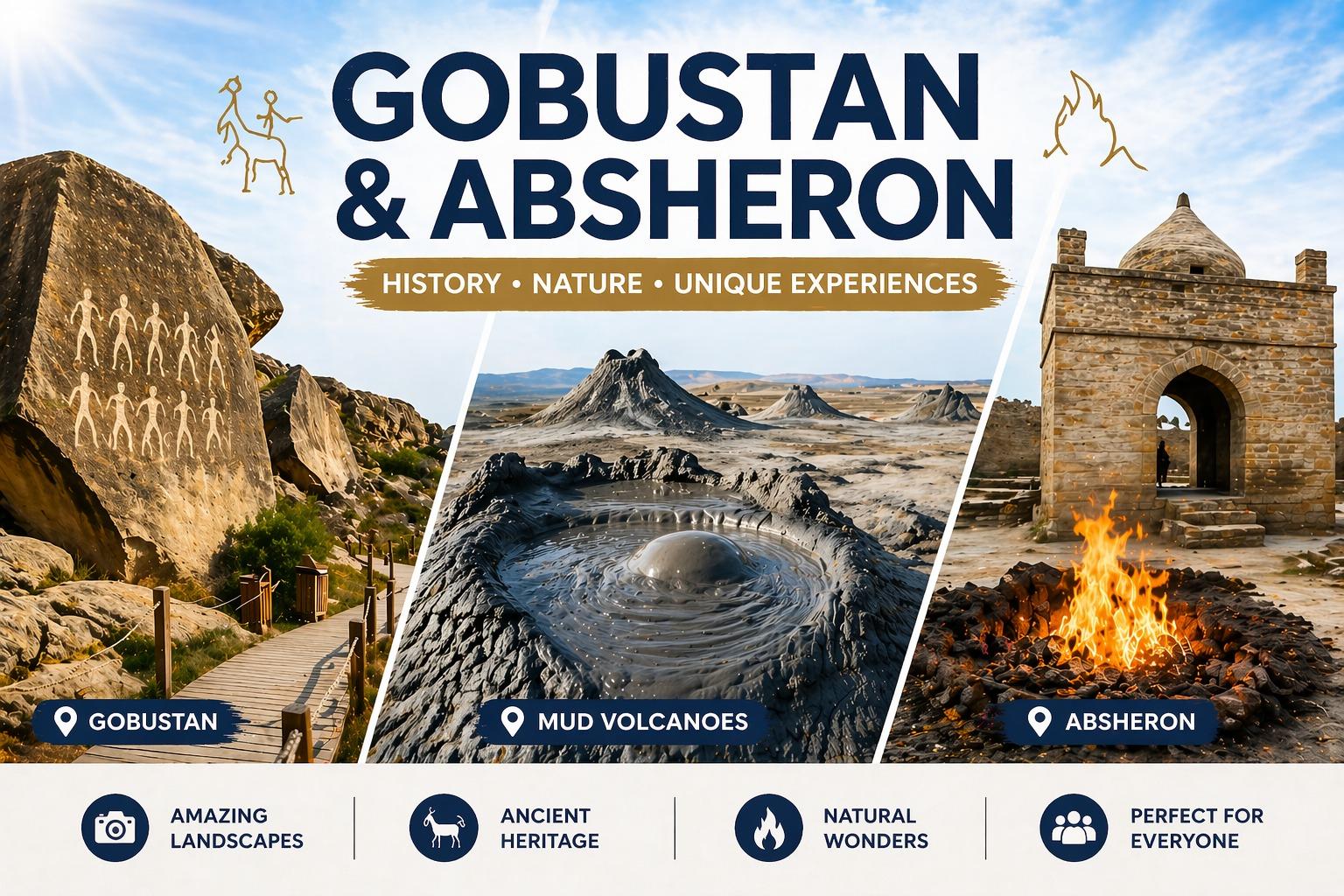
Discover Azerbaijan's ancient petroglyphs, eternal flames, and mud volcanoes on this full-day expedition
Reserve
Hand-picked by our editors – only the best 5 experiences from 18 reviewed
Verified partners for every tour, free cancellation where available, and instant confirmation on every booking.
9 hr
Discover Azerbaijan's ancient petroglyphs, eternal flames, and mud volcanoes on this full-day expedition
Reserve
8 hr
Journey through ancient petroglyphs, bubbling mud volcanoes, sacred fire temples, and stunning modern architecture
Reserve
6 hr
Discover ancient petroglyphs, bubbling mud volcanoes, and Azerbaijan's fire-worshipping heritage on this full-day adventure
ReservePrices from verified partners. Availability updates in real time at checkout. Free cancellation policies apply where shown.
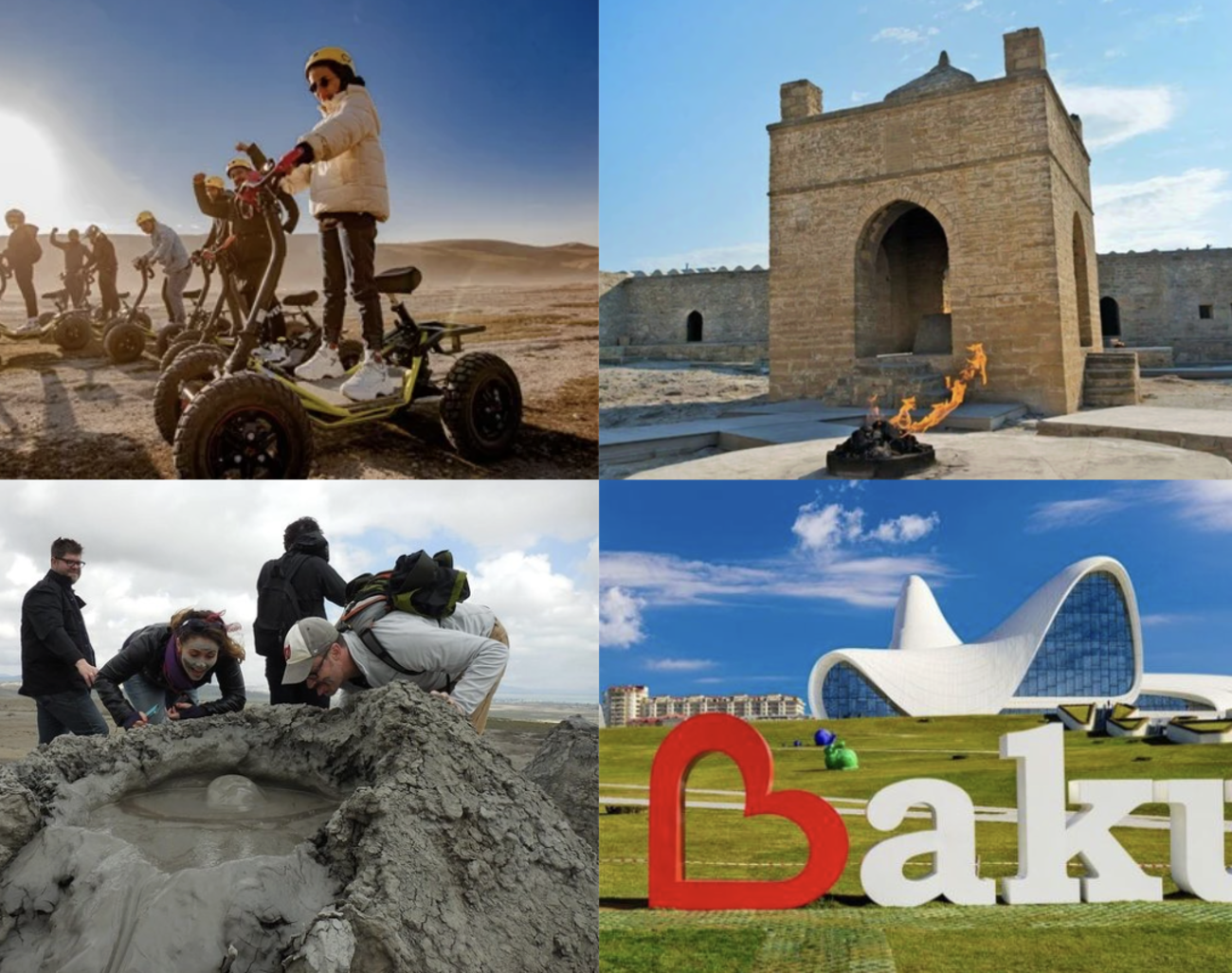
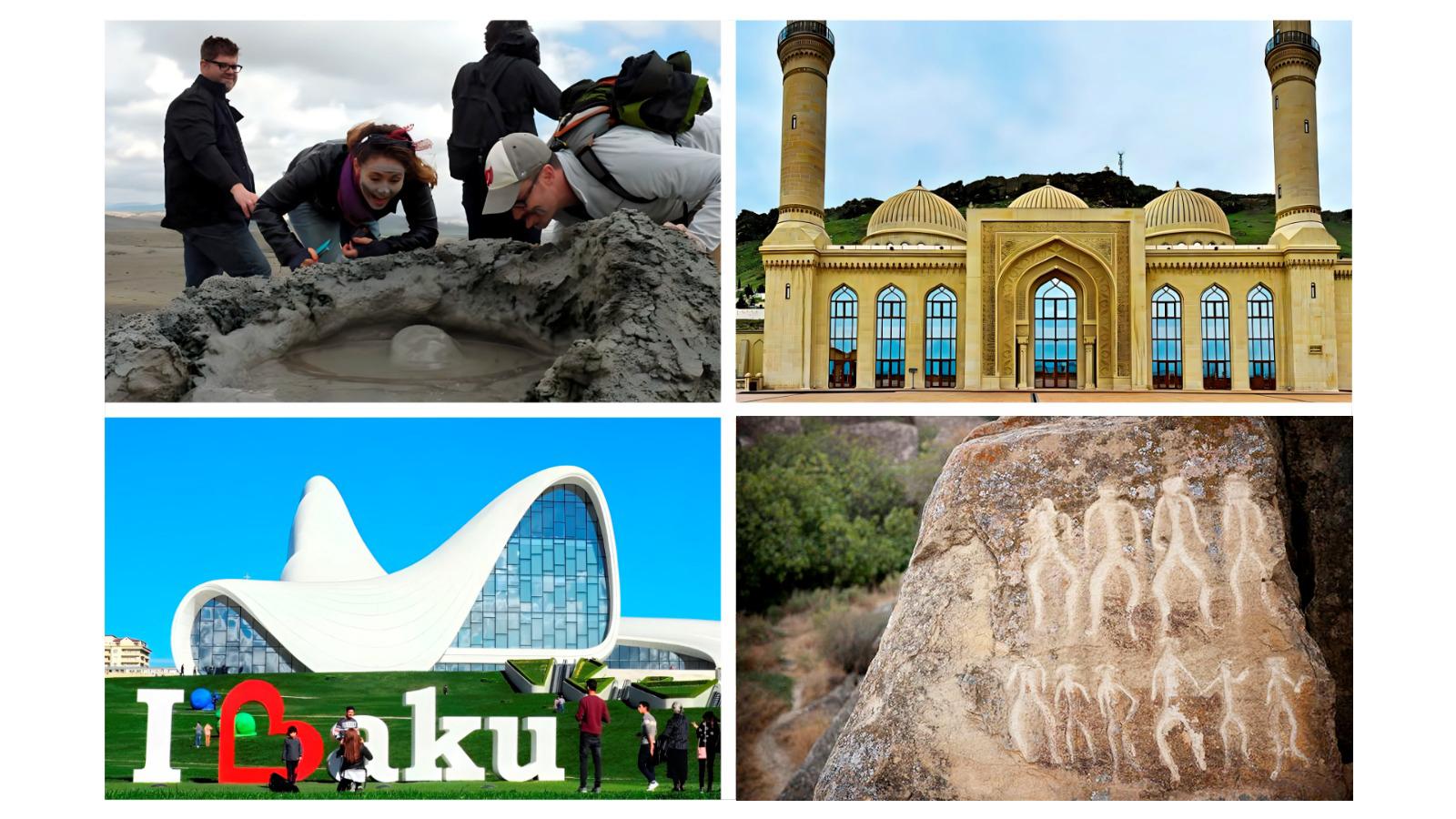
The landmarks, rooms, and views travelers on this tour remember — all visible on a single visit.
These 40,000-year-old rock carvings showcase ancient hunting scenes and ritual dances throughout the reserve.
A state-of-the-art facility featuring interactive 3D displays and artifacts found in the surrounding desert.
One of the world's largest concentrations of cold-erupting mud volcanoes, creating a unique, bubbling lunar landscape.
An ancient, resonant 'singing' stone used by early humans as a musical percussion instrument.
Explore the caves and rocky shelters that provided refuge to prehistoric communities for millennia.
A professional guide provides essential historical context for ancient petroglyphs and fire temples, while self-guided rental car excursions offer more flexibility for remote landscape exploration. Professional tours are superior for navigating the complex geography of the Absheron Peninsula, whereas independent travel suits those who prioritize pacing their own day.
| Feature | Top pick Organized Tour | Rental Car |
|---|---|---|
Navigational Complexity |
Low (Guide managed) | High (Requires GPS navigation) |
Off-road Vehicle Requirements |
Provided by operator | Often required for volcanoes |
Access to Sites |
Priority access | Public parking only |
Historical Context Provided |
Expert narrative included | None (Self-research required) |
Total Travel Time |
7–9 hours | Variable (Driver dependent) |
Fuel and Maintenance Costs |
Included in price | Self-funded (Variable) |
| See tickets → |
Verdict: Those seeking a deep dive into UNESCO heritage sites should book gobustan mud volcanoes and absheron tour tours, while independent travelers preferring private pacing will find gobustan mud volcanoes and absheron tour tickets for vehicle rental a suitable alternative.
Choose your ticket, select your date, and reserve in under two minutes. Secure checkout handled by our verified partner.
Instant confirmation by email, with a mobile voucher you can save offline. No printing, no queuing at a collection desk.
Arrive at the entrance, show your voucher on your phone, and walk in. Most tickets include priority or skip-the-line access.
Practical details for your visit straight from our verified partners — hours, access, rules, and how to get there.
Baku City Center
Standard pickup for most tours
A private taxi or tour vehicle is the most direct way to reach the reserve from Baku.
Take a bus to Gobustan town and hire a local taxi for the final stretch.
Wear breathable, comfortable clothing suitable for a semi-desert climate. Sturdy walking shoes are highly recommended for the rocky trails of the gobustan mud volcanoes and absheron tour.
Smaller backpacks are ideal for the terrain. Security is standard, but you are expected to respect the UNESCO-protected environment during your gobustan mud volcanoes and absheron tour.
Photography is encouraged throughout the site, particularly of the petroglyphs and geological formations. Using drones may require prior permission during your gobustan mud volcanoes and absheron tour.
The museum area is modern and wheelchair-accessible. However, the outdoor trails and mud volcanoes on a gobustan mud volcanoes and absheron tour feature uneven, natural terrain that can be difficult to navigate.
Mobile reception can be spotty in the remote desert areas. Ensure you have your offline maps downloaded for your gobustan mud volcanoes and absheron tour.
The area is suitable for older children who can handle moderate walking. Note that the terrain at the mud volcanoes on a gobustan mud volcanoes and absheron tour can be muddy and uneven.
Carry sufficient water and snacks, as facilities are limited. It is best to hydrate before beginning the outdoor segments of your gobustan mud volcanoes and absheron tour.
Pets are generally not permitted on the guided walking trails of the reserve. Please arrange care before departing on your gobustan mud volcanoes and absheron tour.
The gobustan mud volcanoes and absheron tour typically combines historical archaeological exploration with a visit to the unique volcanic landscapes. Bookings usually include round-trip transport from Baku.
Best time to go, insider tips, nearby landmarks, and the cancellation fine print — flip through to skim what matters to you.
How crowds, weather, and events shift across the year.
March–May offers mild weather perfect for hiking the outdoor trails.
June–August is hot; visit early in the morning to stay cool.
September–November provides comfortable temperatures for all-day sightseeing.
Small details that turn a good visit into a great one.
Arriving by 09:00 helps you beat the intense midday desert heat.
The rocky trails for the gobustan mud volcanoes and absheron tour require good grip.
Integrate your gobustan mud volcanoes and absheron tour with a visit to the Absheron Peninsula.
Never touch the ancient carvings during your gobustan mud volcanoes and absheron tour.
Avoid the mud volcano fields in very heavy rain as the terrain becomes difficult to navigate.
Non-bookable sights within a short walk — free to visit, easy to pair.
A beautiful, modern reconstruction of a historic 13th-century mosque.
A historic site once used by Zoroastrians for fire rituals.
A natural gas fire that has been burning for decades.
Flexible, no hidden fees.
Full refunds are typically available for tour bookings cancelled at least 24-48 hours in advance. Please verify the terms of your specific gobustan mud volcanoes and absheron tour ticket.
Hand-picked options within walking distance — pick a district for vibe, or a specific hotel for convenience.
High-end hotels with modern amenities and transport access.
Convenient hotels near the Caspian Sea and local eateries.
The Gobustan National Historical-Artistic Preserve holds more than 6,000 rock engravings carved between 40,000 and 5,000 years ago. Hunters, dancers, and aurochs cover sandstone boulders that once overlooked the Caspian shoreline, back when the sea reached 25 metres higher than it does today. UNESCO inscribed the site in 2007, recognizing its testimony to pre-agrarian settlement and Ice Age fauna. The reserve spans 537 hectares, with the densest concentration of petroglyphs clustered on Beyukdash, Kichikdash, and Jingirdag mountains. Archaeological digs here unearthed Neolithic dwellings, flint tools, and evidence of Zoroastrian burials. Beyond the rock art, Gobustan's eastern edge opens onto a field of mud volcanoes—more than 300 within Azerbaijan, the highest concentration on Earth. These cold seeps erupt methane-rich slurry from sedimentary layers kilometers below. The largest cone, Dashgil, reaches 400 metres in diameter and occasionally spouts flames when gas pockets ignite. Visitors walk across cracked grey plains where miniature craters bubble at irregular intervals, some no larger than a dinner plate. The Absheron Peninsula leg of the tour anchors in two architectural monuments. Ateshgah, the Fire Temple at Surakhany, was built by Baku's Indian trading community in the 17th century around a natural gas seep that burned continuously until Soviet engineers capped the field in 1969. The pentagonal caravanserai encloses a central altar where Zoroastrian, Hindu, and Sikh pilgrims once tended eternal flames. Yanar Dag, the Burning Mountain, remains one of the few hillside gas seeps still alight. A 10-metre wall of fire has burned without interruption since at least the 13th century, fueled by a porous sandstone layer that leaks methane to the surface. Marco Polo referenced similar fires on the Absheron coast in his 1271 accounts. Combined Gobustan mud volcanoes and Absheron tour itineraries typically allocate two hours at the preserve, one hour at the volcano field, and 90 minutes split between Ateshgah and Yanar Dag. The drive from Baku's center to Gobustan covers 65 kilometers southward along the M1 highway, then 15 kilometers inland on a gravel access road. Return routes loop north through Absheron's industrial coastline, passing Soviet-era oil derricks and the Bibi-Heybat Mosque before re-entering the city.

"More than 6,000 rock engravings span 35,000 years, testimony to hunters who watched the Caspian recede."
A step-by-step walkthrough of the visit — what you'll see, how long each stage takes, and the details that matter.
You leave Baku before 9:00, driving south past the Sangachal oil terminal where the Caspian horizon flattens into haze. The M1 turns inland at Alat, and the pavement gives way to a gravel track that climbs into the Gobustan hills. Your guide walks you through the open-air museum, pointing out a panel where aurochs face a line of archers, their proportions compressed by the curve of the stone. You spend 20 minutes at the interactive museum reviewing settlement timelines before returning to the boulders. The vehicle bounces east toward the mud volcano field. You step onto a cracked plain where grey slurry oozes from a dozen small cones. The largest crater belches methane every few minutes, and you photograph the ripples spreading across the pooled mud. The air smells faintly of sulfur. After an hour you return to the highway and drive north into Absheron, stopping first at Ateshgah. You circle the caravanserai's perimeter, reading Persian inscriptions above the cells, then watch a recorded flame at the central altar. The final stop is Yanar Dag, where you stand three metres from the hillside fire. Heat bakes your face. The sun sets behind the flames, and you return to Baku by 18:30.
The reserve is open daily from 09:00–17:00. The gobustan mud volcanoes and absheron tour usually follows these hours for site visits.
The standard entrance fee is 10 AZN for foreign adult visitors. This fee is essential for your gobustan mud volcanoes and absheron tour experience.
Yes, booking your gobustan mud volcanoes and absheron tour tickets in advance is recommended to ensure vehicle availability and seamless transport.
The best arrival window is 09:00–11:00 to avoid peak heat and afternoon crowds.
The museum is accessible, but the natural, rocky terrain at the reserve and volcanoes presents challenges for those with limited mobility.
Yes, photography is permitted. It is a highlight of the gobustan mud volcanoes and absheron tour.
Bring water, sunscreen, a hat, and sturdy shoes for your gobustan mud volcanoes and absheron tour.
Facilities are very limited, so carry your own snacks and drinks on the tour.
Yes, children are welcome on the gobustan mud volcanoes and absheron tour, though the terrain is best suited for older kids.